
Magic Milk Art Project is one of the most exciting ways to combine science and creativity in a single activity. With just milk, dish soap, food coloring, and paper, kids can create colorful swirling designs while learning about surface tension and how soap interacts with fat molecules. The best part is that every design is completely unique, turning a simple science experiment into a beautiful piece of artwork.
Whether you're looking for a rainy-day activity, a classroom STEAM project, or a fun weekend craft, this Magic Milk Art Project delivers colorful results with minimal preparation. Children love watching the colors dance across the milk, and adults often find the process just as fascinating.
One afternoon, we were searching for an activity that felt both educational and creative. We gathered a few kitchen supplies, added colorful drops of food coloring to milk, and touched the surface with a little dish soap. Instantly, the colors began moving in every direction. Everyone stopped talking and simply watched the swirling patterns form. When we transferred the designs onto watercolor paper, the results looked like professional marble art. Since then, this Magic Milk Art Project has become a favorite because it is easy, affordable, and packed with colorful surprises.
Ingredients
Equipment
Method
- Gather all supplies and materials.
- Cut paper towel into circles or squares.
- Decorate the paper towel with washable markers or food coloring.
- Pour milk into a shallow dish until the bottom is covered.
- Place a drop of dish soap in the center of the decorated paper towel.
- Set the paper towel into the milk and watch the colors spread.
- Use a popsicle stick to gently move the colors if desired.
- Remove the paper towel and place watercolor paper onto the milk surface for 5-10 seconds.
- Lift the paper, allow it to dry completely, and display your finished artwork.
Notes
Tried this recipe?
Let us know how it was!Why the Magic Milk Art Project Works
A Perfect Blend of Science and Creativity
The Magic Milk Art Project allows children to explore scientific concepts while creating something beautiful. As the colors move across the milk, kids observe changes happening right before their eyes.
Unlike many science experiments that end after the reaction occurs, this project creates a lasting piece of art. Therefore, children not only learn but also leave with a colorful masterpiece they can display.
Additionally, the activity encourages creativity because there is no right or wrong design. Every print becomes a unique work of art.
Simple Supplies with Big Results
One reason this project is so popular is that it requires only a handful of common household materials.
You will need:
- Milk
- Clear dish soap
- Food coloring
- Watercolor paper
- Paper towels
- Washable markers
- Popsicle sticks
- A shallow dish or pie plate
Because the materials are inexpensive and easy to find, the project works well for families, classrooms, homeschool lessons, and summer activities.
Materials and Preparation
Choosing the Right Milk
Whole milk or 2% milk works best for the Magic Milk Art Project. The higher fat content creates stronger movement and more dramatic swirling patterns.
While skim milk will still work, the reaction tends to be less impressive because there is less fat for the soap to interact with.
Pour only enough milk into the dish to cover the bottom. A shallow layer provides the best viewing experience and helps create cleaner art prints.
Preparing Your Color Design
Begin by cutting paper towel circles or squares. Then decorate them using washable markers.
Rainbow patterns work beautifully, but color combinations such as:
- Blue, green, and yellow
- Pink, purple, and blue
- Red, orange, and yellow
also create stunning results.
For brighter marbling effects, add a few drops of food coloring directly onto the paper towel before starting the experiment.
How to Make Magic Milk Art
Create the Color Reaction
Pour milk into a shallow dish until the bottom is covered.
Place a small drop of clear dish soap in the center of the decorated paper towel. Then gently set the paper towel into the milk.
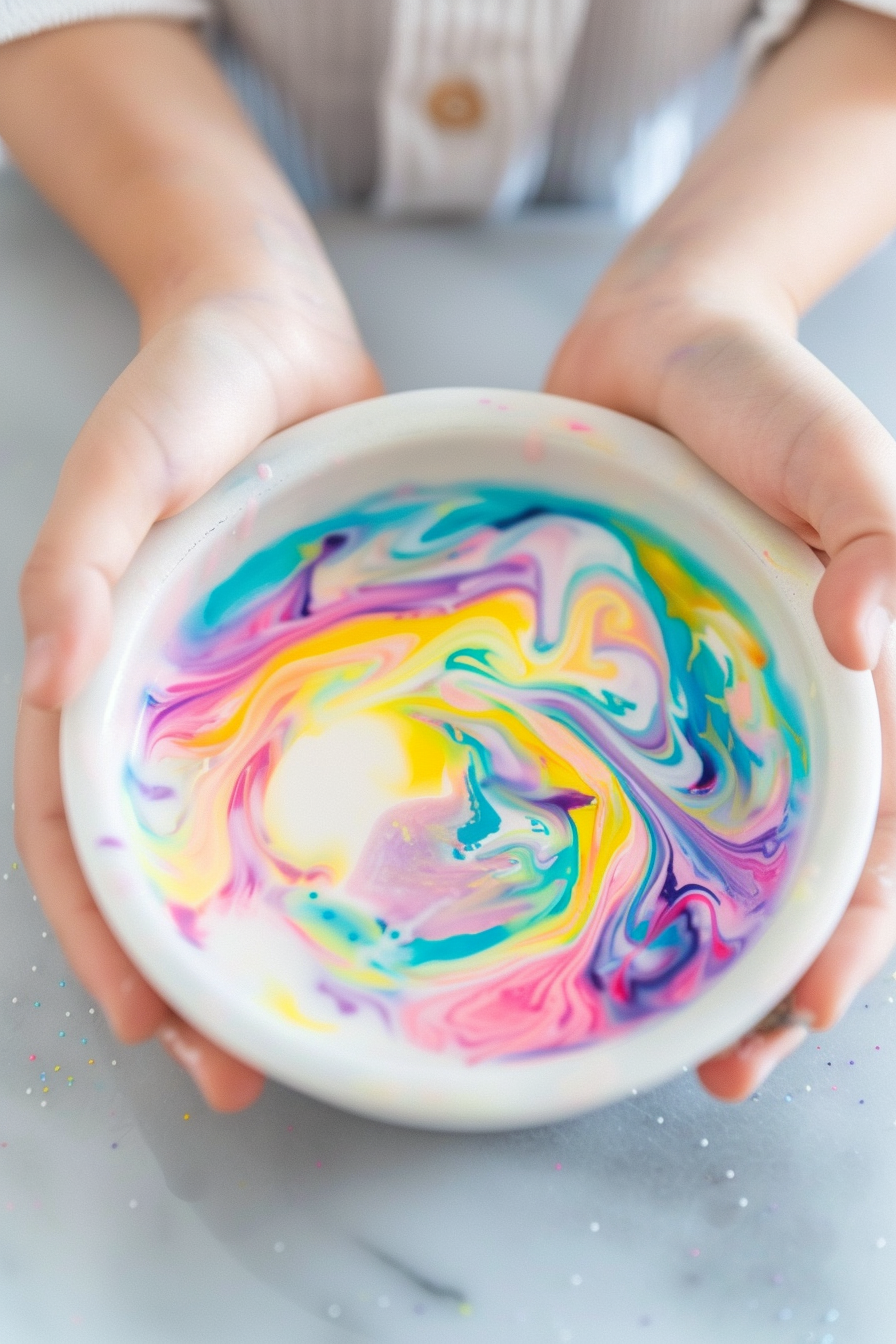
Within seconds, the colors begin spreading outward. The reaction creates beautiful swirls, waves, and colorful movement across the milk's surface.
For even more dramatic effects, use food coloring on the paper towel instead of markers. The stronger pigments create richer color patterns.
Transfer the Design to Paper
Once the colors have spread throughout the milk, carefully remove the paper towel.
Place a piece of watercolor paper onto the milk surface and allow it to sit for 5 to 10 seconds.
Make sure all parts of the paper touch the liquid. Then gently lift the paper and reveal the marbled design.
Lay the artwork flat on parchment paper and allow it to air dry completely.
Every print will look different, which makes the Magic Milk Art Project exciting every time you try it.
The Science Behind the Magic
Understanding Surface Tension
The movement happens because milk contains tiny amounts of fat suspended in liquid.
Normally, surface tension keeps the milk relatively stable. However, when dish soap touches the milk, it begins breaking that surface tension.
As the soap spreads, it pushes against the fat molecules. This movement causes the colorful dyes to swirl and travel across the surface.
The result appears magical, but it is actually a fascinating chemistry reaction happening in real time.
Why Soap Makes Colors Move
Dish soap contains molecules that are attracted to both water and fat.
As the soap searches for fat molecules within the milk, it creates movement throughout the liquid. Consequently, the colors get pushed, pulled, and swirled into beautiful patterns.
The more fat present in the milk, the stronger the reaction tends to be. Therefore, whole milk usually produces the most dramatic effects.
Tips for Success and Fun Variations
Helpful Tips
Use clear dish soap whenever possible. Colored soaps may slightly affect the appearance of the milk.
Allow the finished artwork to dry naturally. Avoid blotting the paper because doing so may remove color and reduce the marbled effect.
Also, remove the paper towel before placing watercolor paper into the milk. This helps prevent soap transfer onto the final print.
Creative Variations
Try experimenting with different color combinations.
Create seasonal themes such as:
- Red and green for Christmas
- Orange and black for Halloween
- Pastels for Easter
- Red, white, and blue for summer celebrations
You can also test different milk varieties and compare how the reactions change.
Older children may enjoy recording observations and predicting results, turning the Magic Milk Art Project into a complete science lesson.
Frequently Asked Questions
What type of milk works best?
Whole milk or 2% milk creates the strongest reaction because of the higher fat content.
Can I use markers instead of food coloring?
Yes. Washable markers work well for creating colorful paper towel designs, although food coloring produces more vibrant marbled prints.
Why are the colors moving?
The dish soap breaks the milk's surface tension and interacts with fat molecules, causing movement throughout the liquid.
Does the finished artwork smell like milk?
No. Once dry, the artwork typically has no noticeable milk odor.
Can adults enjoy this project too?
Absolutely. Many adults find the colorful swirling patterns relaxing and satisfying to create.
Conclusion
The Magic Milk Art Project combines science, creativity, and hands-on fun into one unforgettable activity. Children learn about surface tension while creating beautiful marbled artwork they can proudly display. With simple materials and endless color possibilities, this project offers a wonderful way to explore STEAM concepts while making colorful memories.
Leave a Reply