

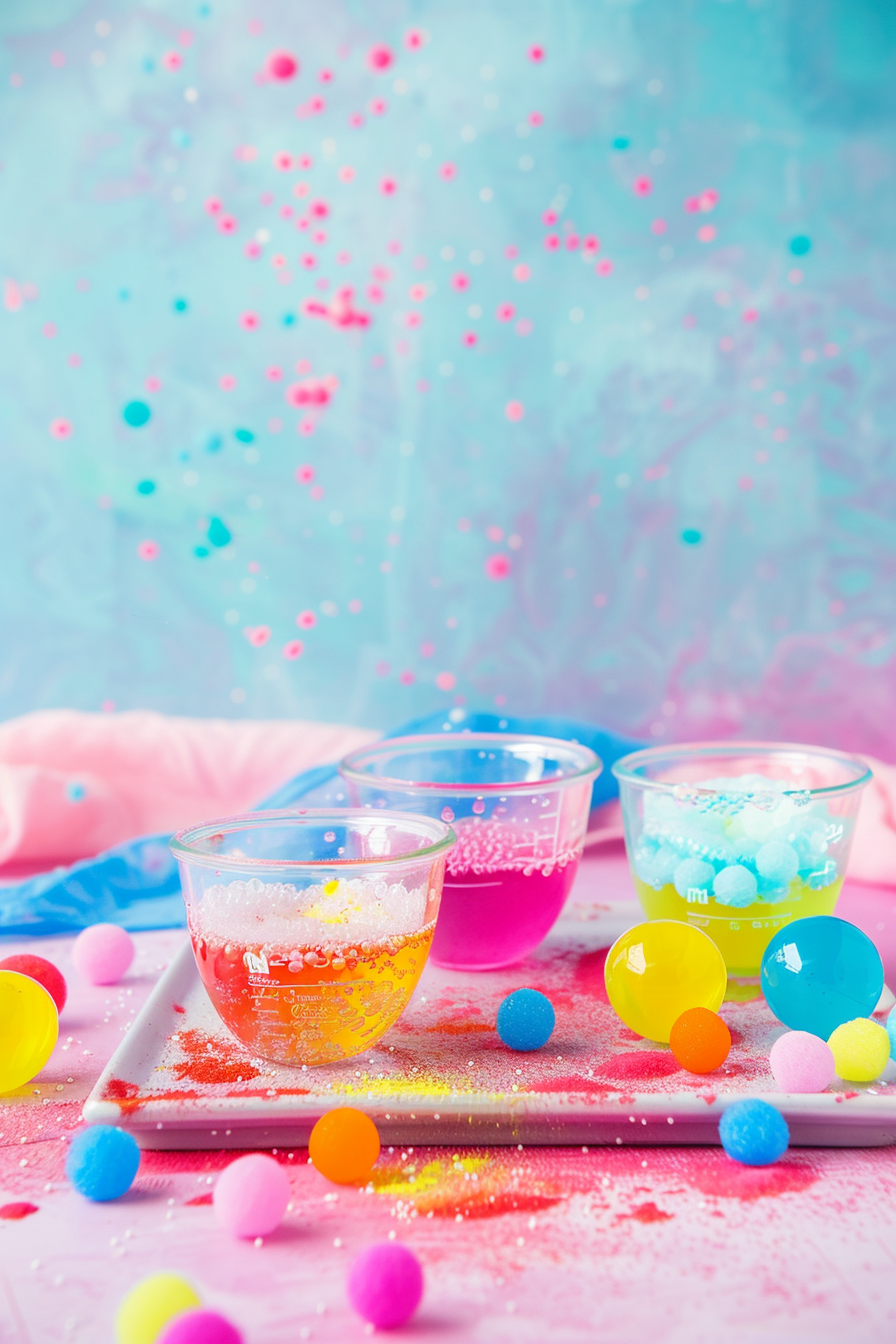
Learning How to Make a Bouncy Ball is a fun science activity that combines creativity, chemistry, and hands-on learning. With a few simple household ingredients, kids can create their own colorful bouncing ball while exploring how polymers work. This experiment is perfect for classrooms, homeschool lessons, science fairs, or a rainy afternoon at home.
The best part is watching the liquid ingredients transform into a solid ball that can actually bounce. It feels like magic, but it's really science in action!
The first time we made homemade bouncy balls, everyone was skeptical that a few ingredients mixed in a cup could turn into something that bounced. After stirring the mixture and rolling it into shape, the excitement was immediate. We tested different colors, sizes, and bounce heights, turning a simple experiment into an afternoon of discovery. It's one of those science activities that children remember long after the project is finished.
Ingredients
Equipment
Method
- Mix borax and warm water in a small cup.
- Combine glue, cornstarch, and food coloring in another cup.
- Pour the borax solution into the glue mixture and stir.
- Remove the mixture and knead it into a ball.
- Allow it to set briefly and test the bounce.
Notes
Tried this recipe?
Let us know how it was!Why You'll Love This Experiment
Hands-On Science
Children can see a chemical reaction happen right before their eyes.
Quick Results
The entire project takes less than 20 minutes from start to finish.
This experiment combines learning and play, making science feel exciting and accessible.
Materials You'll Need
Basic Supplies
- 1 tablespoon white school glue
- 1 tablespoon cornstarch
- 1 tablespoon warm water
- ½ teaspoon borax powder
- Food coloring (optional)
Equipment
- 2 small cups or bowls
- Spoon or craft stick
- Measuring spoons
- Disposable gloves (optional)
How to Make a Bouncy Ball
Step 1: Prepare the Borax Solution
In a small cup, mix:
- 1 tablespoon warm water
- ½ teaspoon borax
Stir until mostly dissolved.
Step 2: Mix the Glue Solution
In a second cup, combine:
- 1 tablespoon white glue
- 1 tablespoon cornstarch
Add a few drops of food coloring if desired.
Mix until smooth.
Step 3: Combine the Mixtures
Pour the borax solution into the glue mixture.
Stir for about 15–20 seconds.
The mixture will begin to thicken quickly.
Step 4: Form the Ball
Remove the mixture from the cup.
Use your hands to knead and roll it into a ball.
At first it may feel sticky, but it will become firmer as you continue shaping it.
Step 5: Test the Bounce
Allow the ball to rest for a minute.
Then drop it gently onto a hard surface and watch it bounce.
The Science Behind the Experiment
What Is Happening?
The glue contains polymers, which are long chains of molecules.
When borax is added, it links these chains together, creating a flexible solid.
Polymer Formation
The reaction creates a stretchy material that is:
- Flexible
- Durable
- Elastic
This elasticity allows the ball to bounce.
Why It Works
The polymer chains can stretch and compress when the ball hits the floor, storing and releasing energy.
Educational Benefits
STEM Learning
Children explore:
- Chemistry
- Polymers
- Chemical reactions
- Material properties
Observation Skills
Kids can compare:
- Bounce height
- Ball size
- Color variations
- Texture differences
Fun Variations
Glow-in-the-Dark Ball
Add glow pigment or glow paint.
Glitter Ball
Mix fine glitter into the glue solution.
Rainbow Ball
Combine multiple colors before kneading.
Giant Bouncy Ball
Double the recipe to create a larger version.
Tips for Success
Mix Quickly
The reaction begins immediately after combining the ingredients.
Use White School Glue
Standard washable school glue provides the most reliable results.
Knead Thoroughly
Rolling and kneading improves elasticity.
Store Properly
Keep the ball in a sealed plastic bag to prevent drying out.
Frequently Asked Questions
Is borax safe?
Borax should be handled with adult supervision and should not be ingested.
How long does the bouncy ball last?
When stored in an airtight container, it can last several days to a few weeks.
Can I use clear glue?
Yes. Clear glue works well and creates a more transparent ball.
Why isn't my ball bouncing?
It may need more kneading or the ingredient measurements may be off.
Can I make different colors?
Absolutely. Food coloring allows endless customization.
Conclusion
How to Make a Bouncy Ball is a fun science experiment that transforms everyday ingredients into a toy you can actually play with. By exploring polymers and chemical reactions, children gain hands-on STEM experience while creating something exciting. Whether used in a classroom, homeschool setting, or family activity, this homemade bouncy ball project is always a crowd-pleaser.
Leave a Reply